

More Pitch Doesn't Always Mean More Performance
You've found the perfect motor, matched it with the right ESC and battery and now comes one of the most important decisions of all: which propeller should you bolt on?
Many RC pilots assume that increasing propeller pitch automatically makes an aircraft faster - and they're right... to a point. But just like changing gears in a car, choosing the wrong pitch may actually reduce overall performance, increasing current draw and making your power system work much harder than necessary.
So how do you know when to choose a high-pitch propeller and when a low-pitch propeller is the better option?
Let's clear up one of the most common questions in RC aviation.
What Exactly Is Propeller Pitch?
A simple way to understand pitch is to imagine a wood screw.
Every full turn of the screw moves it forward by a certain distance. A propeller works in much the same way (through the air). Pitch represents the theoretical distance a propeller would travel forward in one complete revolution.

Another helpful way to think about pitch is as a transmission gear.
A low-pitch propeller is like first gear - easy for the motor to turn, excellent for pulling power and low-speed performance.
A high-pitch propeller is more like top gear. It can achieve higher speeds, but only if the motor has enough power to pull it efficiently.
For this comparison, we'll assume both propellers have the same diameter and the same number of blades. The only variable is the pitch.
How Pitch Changes Performance
Static Thrust
Low-pitch propellers generally produce greater static thrust than high-pitch propellers. That makes them excellent for take-offs, hovering and slow-speed manoeuvres where that kind of immediate pulling power matters most.
Speed
Once an aircraft begins moving forward, the dynamic changes.
A high-pitch propeller pushes more air forward with every revolution, giving the aircraft a higher potential top speed. If your motor has enough power to maintain RPM, the reward is greater cruise and maximum airspeed.

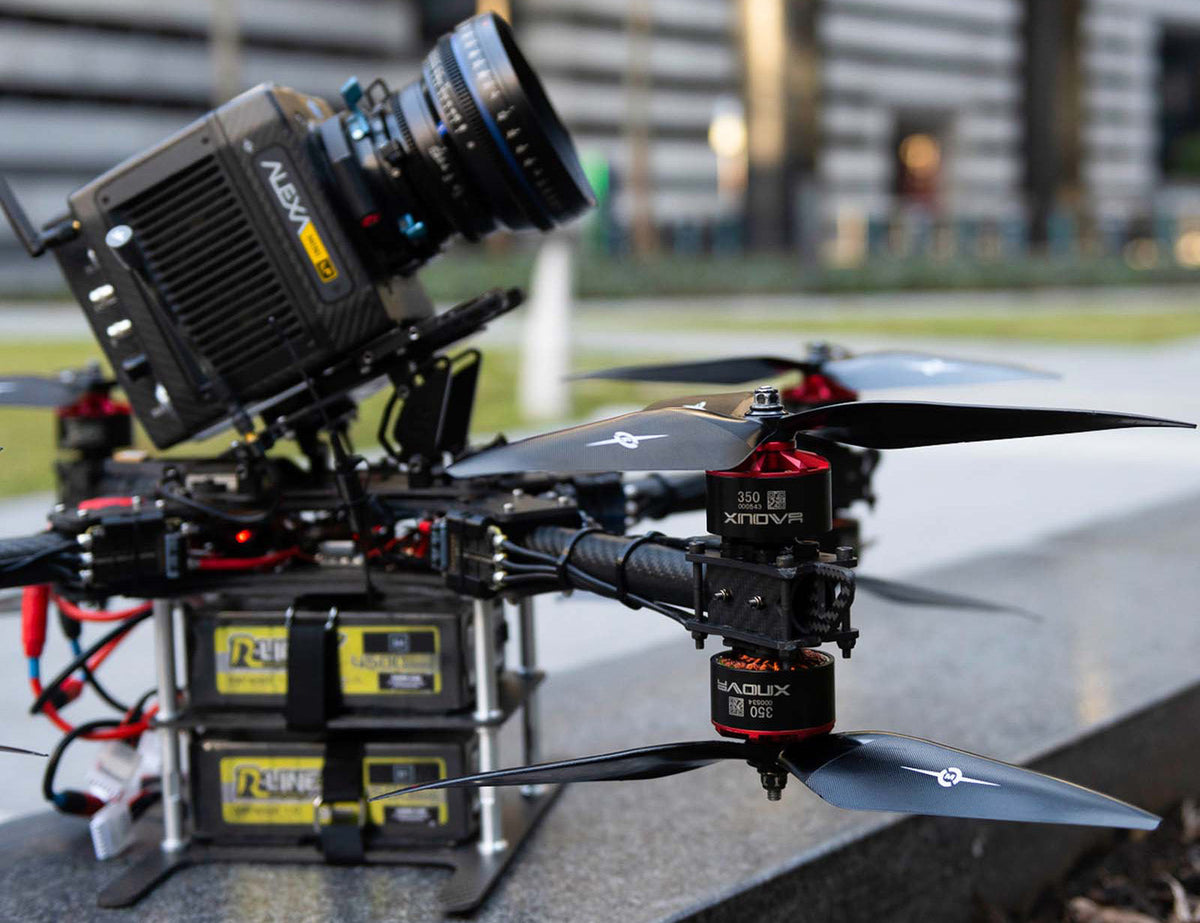
Photo courtesy of Charlie Locke
Power Consumption
Higher pitch comes at a price.
Because each revolution asks the motor to move more air, current draw increases. The motor works harder, runs hotter and consumes more battery power. Low-pitch propellers, on the other hand, are easier to spin, drawing less current while keeping motor temperatures lower.
Throttle Response and Acceleration
Pilots often notice the difference immediately.
Low-pitch propellers deliver smooth, predictable acceleration that's easy to manage, especially during hovering and precision flying. High-pitch propellers feel more aggressive, with sharper throttle response and stronger acceleration once the aircraft is moving.
Efficiency and Flight Time
One of the biggest advantages of low-pitch propellers is efficiency.
They excel during hover and low-speed cruise, requiring less power to stay airborne. The result is less current draw, so longer flight times, cooler motors and, in most comparable setups, quieter operation.

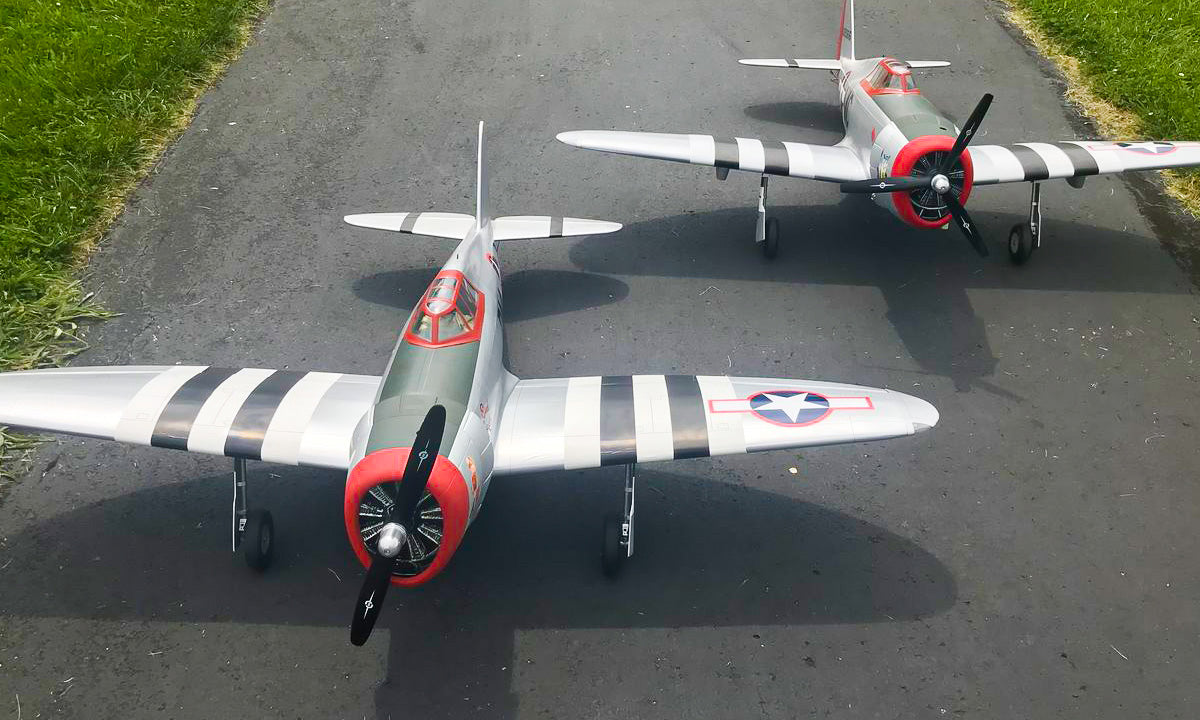
Photo courtesy of Travis Brann
High-pitch propellers become more efficient at higher airspeeds, but they generally shorten flight time because of their increased power demands.
Which Pitch Should You Choose?
If your goal is smooth handling, long flight times, cooler-running motors, quieter operation and efficient hovering, a low-pitch propeller is usually the better choice. They're ideal for trainers, photography drones, endurance aircraft and applications where efficiency matters more than outright speed.
If maximum airspeed is your priority - and your motor is capable of handling the increased load - a high-pitch propeller offers higher cruise speed, stronger acceleration and improved high-speed performance. That's why they're commonly found on racing models, fast sport aircraft and performance-oriented FPV builds.
Final Thoughts
Choosing the right propeller pitch isn't about selecting the biggest number - it's about matching the propeller to your aircraft, motor, power unit and flying style.
Think of pitch as gearing: lower pitch provides effortless pulling power and efficiency, while higher pitch rewards speed with increased demands on the power system. Neither is inherently better; each excels in the application it was designed for.
If you're unsure which pitch is right for your setup, you don't need to leave it to guesswork. The team at Master Airscrew has decades of experience helping RC pilots and drone enthusiasts choose the ideal propeller for their aircraft. Get in touch - we'll be happy to recommend the right propeller to help you achieve the performance you're looking for.


Leave a comment
All comments are moderated before being published.
This site is protected by hCaptcha and the hCaptcha Privacy Policy and Terms of Service apply.