
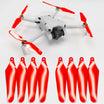
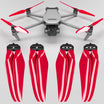
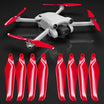
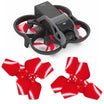


If you've ever packed an RC model into the car, you've probably wrestled with propellers. Fixed props always seem to find a way to snag on something, while folding propellers neatly tuck themselves against the fuselage, making transport almost effortless.
It's easy to assume that's the only reason folding propellers exist. After all, if they fold away so conveniently, surely they're simply a more practical version of a fixed propeller?
Not quite.
Just like blade count and pitch, whether a propeller folds or not is another engineering compromise. Each design has distinct advantages and understanding those differences will help you choose the right propeller for your aircraft - not just the easiest one to transport.
What Makes a Propeller Fold?
Unlike a conventional propeller, a folding propeller uses a hinged hub that allows the blades to pivot freely.
As the motor accelerates, centrifugal force swings the blades outward until they lock into their operating position. When power is reduced or the motor stops, the blades fold rearward, dramatically reducing drag as the aircraft moves through the air.
For this comparison, we'll assume both propellers have the same diameter, pitch, blade count and airfoil. The only difference is whether the blades are fixed or folding.
Why Choose a Folding Propeller?
The biggest advantage of a folding propeller appears when the motor isn't running.
With the blades folded neatly alongside the fuselage, aerodynamic drag drops dramatically, allowing gliders and long-endurance aircraft to maintain altitude and glide much more efficiently. That's why electric sailplanes and many fixed-wing UAVs have relied on folding propellers for years.
They also make life easier on the ground. Folding propellers take up far less space during storage and transport and can be deployed much more quickly at the flying field without removing or repositioning the propeller. For portable aircraft, that's a welcome convenience.

Why Fixed Propellers Still Rule
Despite the popularity of folding designs, fixed propellers remain the first choice for most powered aircraft - and for good reason.
With no hinges or moving parts, they respond instantly to throttle inputs, produce slightly higher static thrust, typically achieve marginally higher top speed and generally draw a little less current. They also tend to run more smoothly, resist vibration better and are often quieter in operation.
Another advantage is durability. A fixed propeller has fewer components that can wear over time, while the hinges of a folding propeller require proper maintenance and eventually become wear items.
When maximum responsiveness and consistent performance are the priorities, simplicity wins.

Which Aircraft Benefits Most?
For FPV racing drones, freestyle quads, sport airplanes and the vast majority of multirotors, a fixed propeller is usually the better option. Immediate throttle response, excellent durability and slightly better powered efficiency are exactly what these aircraft demand.
Folding propellers excel in a different environment. Electric sailplanes, long-range fixed-wing UAVs, portable RC aircraft and some camera drones benefit enormously from the reduced drag during unpowered flight and the convenience of compact transport. This advantage is particularly relevant to modern defense and tactical UAV platforms, where compact transport and fast field deployment can be critical. In these situations, 2-blade folding propellers can offer an effective combination of portability and rapid deployment, allowing the aircraft to go from transport to flight-ready with minimal setup.
The right choice depends less on the propeller itself and more on how your aircraft spends most of its time in the air.

Photo courtesy of James Hamman
Final Thoughts
Neither design is universally better.
If your aircraft spends nearly all of its flight under power, a fixed propeller offers immediate throttle response, excellent reliability and slightly higher overall powered performance. But if your aircraft frequently glides with the motor off, the aerodynamic advantage of a folding propeller can easily outweigh its small compromises during powered flight.
As with every propeller decision, the goal isn't to choose the most sophisticated design - it's to choose the one that's best suited to the mission.
Master Airscrew Tip: Before changing propeller types, think about how your aircraft actually flies. A racing quad, a camera drone and an electric sailplane all have very different priorities and the best propeller is the one that complements the aircraft's intended purpose.
If you're not sure which propeller configuration is right for your model, the team at Master Airscrew is here to help. Whether you're flying FPV, sport aircraft, UAVs or sailplanes, we're happy to recommend the propeller that best matches your aircraft, power system and flying style.


Leave a comment
All comments are moderated before being published.
This site is protected by hCaptcha and the hCaptcha Privacy Policy and Terms of Service apply.