







Why Did My Motor Overheat After Changing Propellers?
You change one propeller for another. The new one looks almost identical. The aircraft flies fine - perhaps even better.
Then, a few minutes later, your motor is running hot.
What happened?
The answer is often propeller load.
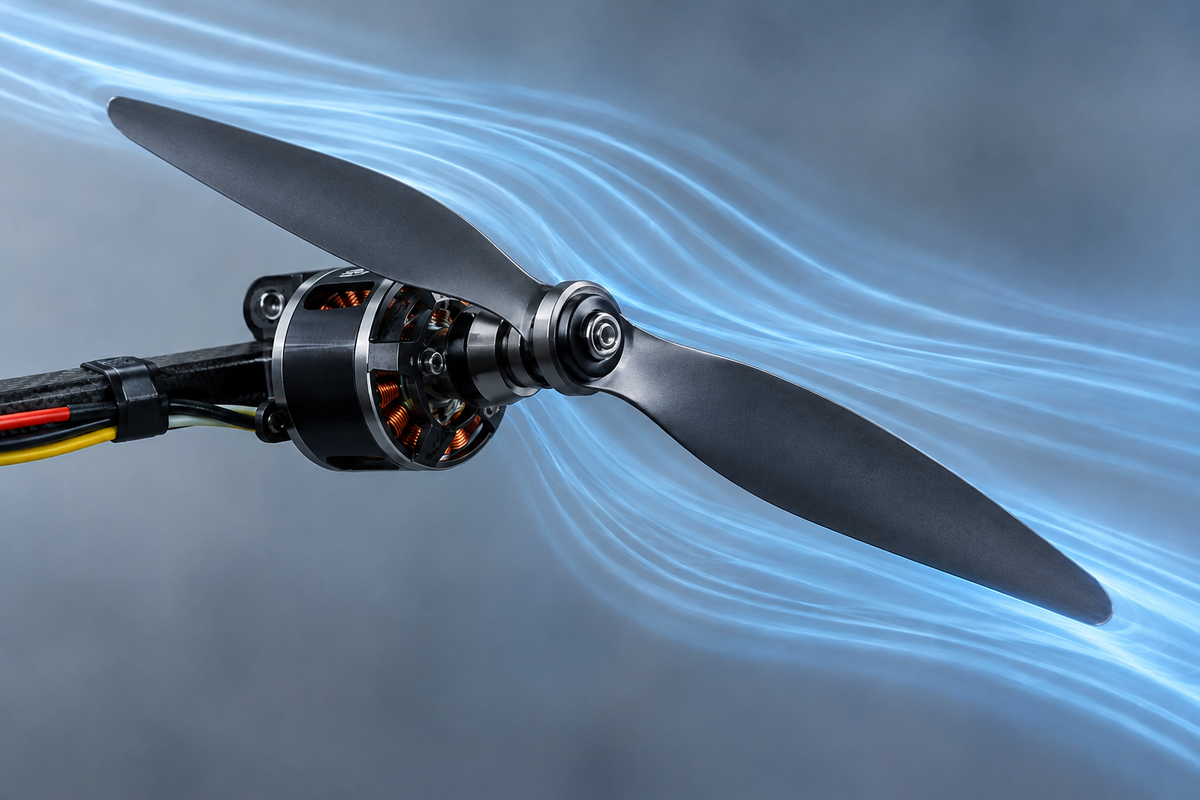
A propeller may look like a relatively simple piece of plastic or composite material, but to the motor it is a significant aerodynamic load. Change the propeller and you can change how hard the motor has to work - sometimes dramatically.
What Is Propeller Load?
In simple terms, propeller load is the amount of work the motor must do to keep the propeller turning at a given RPM.
The larger the aerodynamic load, the more torque the motor needs. More torque generally means more current and more current means more heat generated by the motor and ESC.
This is why two propellers that appear quite similar can produce very different results.
Diameter and Pitch Matter
Two of the biggest factors affecting propeller load are diameter and pitch.
Increasing diameter generally increases the amount of air the propeller has to accelerate and can substantially increase the load on the motor.
Increasing pitch also increases the aerodynamic load because the propeller is trying to move farther through the air with each revolution.
And remember: these factors work together.
A larger, higher-pitch propeller isn't simply giving you "more thrust." It is also asking the motor to provide more torque to turn it.
That's why changing from, for example, a lower-pitch propeller to a higher-pitch version of the same diameter can result in a noticeable increase in current draw and motor temperature.

RPM Changes the Equation
Here's where things get particularly interesting.
A motor doesn't necessarily maintain the same RPM when you install a more heavily loaded propeller. The additional load can cause the motor to slow down.
That might sound like good news - lower RPM should mean less stress, right?
Not necessarily.
The motor may be drawing substantially more current to produce the additional torque required to turn the propeller. The result can be more electrical and thermal stress even though the measured RPM is lower.
This is why simply checking RPM isn't enough when evaluating a propeller combination. Current draw and motor temperature matter too.
Why "Bigger" Isn't Always Better
It's tempting to think that a larger or higher-pitch propeller will automatically make an aircraft perform better.
Sometimes it does.
But if the propeller is too heavily loaded for the motor, the extra thrust can come at the expense of excessive current, reduced efficiency, overheating and potentially shortened component life.
The ideal propeller is therefore not necessarily the one that produces the biggest number on a static thrust test. It is the one that gives the aircraft the performance you need while keeping the motor, ESC and battery within their intended operating limits.

A Useful Rule of Thumb
When changing propellers, change one variable at a time and monitor the system.
If you increase diameter or pitch, pay attention to current draw, motor temperature and ESC temperature rather than looking only at thrust.
A propeller that produces more thrust but pushes the power system beyond its limits isn't really an upgrade.
Final Thoughts
Propeller load is one of the most important - and often overlooked - parts of matching a propeller to an aircraft.
Diameter, pitch, blade count and propeller design all influence how much work the motor has to do. Even a seemingly small change can have a meaningful effect on current consumption and temperature.
Understanding propeller load makes it much easier to understand why the same motor can perform perfectly with one propeller and struggle with another.
Master Airscrew Tip
When changing propellers, don't judge the result by thrust alone. A good propeller combination is a balance between thrust, efficiency, current draw and temperature. If you're moving to a larger, higher-pitch or additional-blade propeller, verify that your motor, ESC and battery can handle the additional load.
Not sure how much propeller your motor can safely handle? Contact Master Airscrew. Our team can help you evaluate the propeller, motor and aircraft combination and select an option suited to your performance requirements.


Leave a comment
All comments are moderated before being published.
This site is protected by hCaptcha and the hCaptcha Privacy Policy and Terms of Service apply.